
No One Likes a Bully
Reflections on the future of US-European relations in the age of Trump

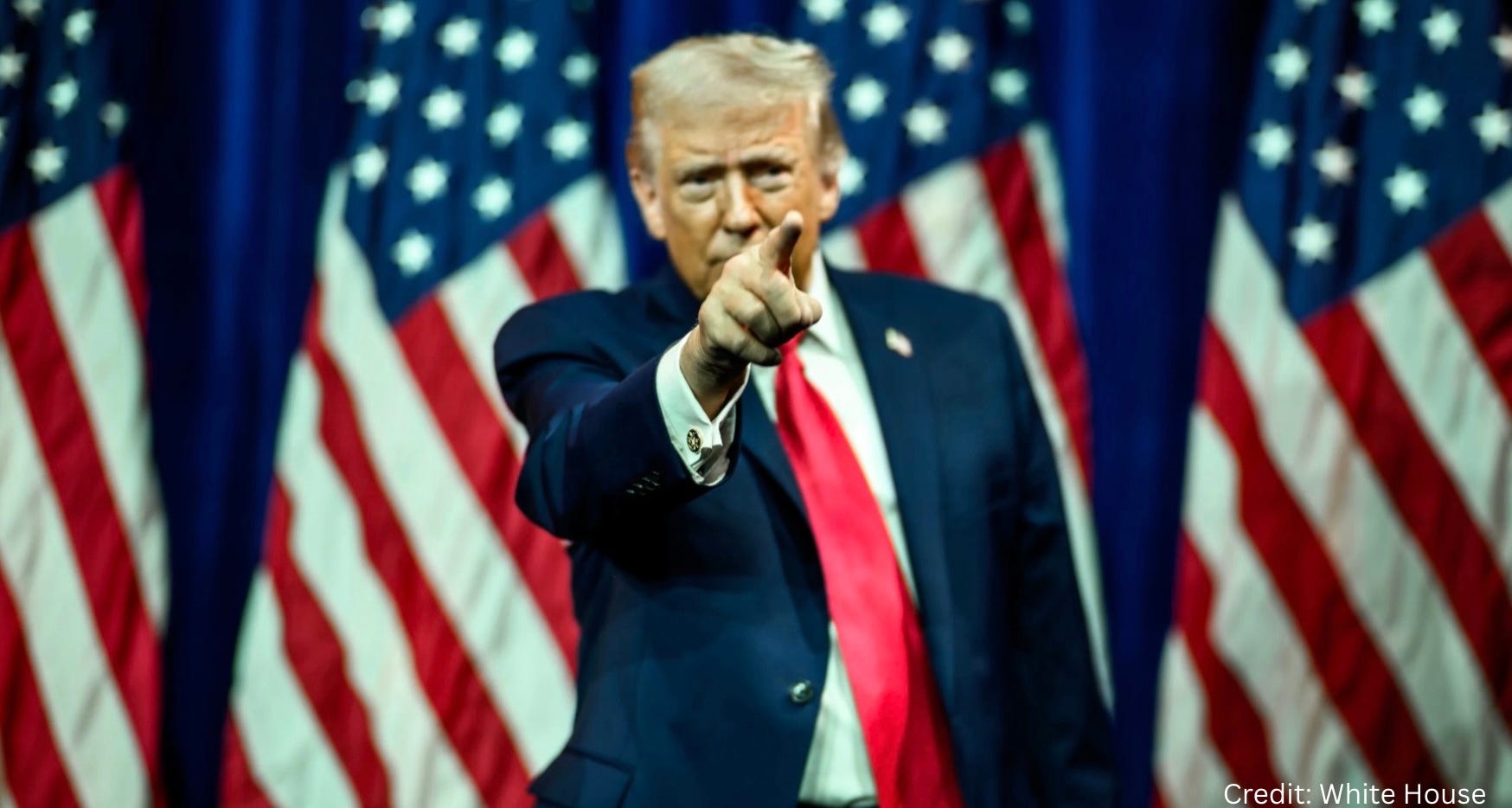
The big news out of the World Economic Forum in Davos, Switzerland, was that the United States will not use force to take Greenland. That’s a relief. Nor, does it seem, will the United States buy the island. That’s also good news. There are a hundred more ways to spend this money more effectively. Instead, NATO allies seemed to have agreed to a framework that will enhance security for Greenland and other Arctic countries. If true, this is also good news. A decade ago, when I was the U.S. ambassador to Russia (2012-2014), we had already started serious conversations with allies about strengthening deterrence against Russian threats in the Arctic. As the Arctic melts, navigation becomes easier. If you look at a map, you will quickly see where Russia might place its ships and submarines in order to patrol the waters and threaten our interests—not only in the Arctic, but also across the whole of the Atlantic. Since that time, we have not done enough. Doing more now—with NATO and not unilaterally—will produce a positive outcome for our collective security.
Even though I haven’t seen the details of this new framework agreement, I am confident in predicting that we could have achieved the same outcome through a more rational and cooperative approach, Instead, Trump reverted to his favorite method of international relations: bullying. That approach has done serious damage to US-European relations, and more generally to America’s reputation in Europe and the world.
For the first time since the end of World War II, the United States threatened to invade a European country. For the first time in the history of our country, President Trump threatened to attack a democratic country. The social sciences do not have many confirmed hypotheses, but one of the most robust findings in political science is that democracies do not go to war with each other. (To read more about this literature, see Michael Brown, Sean Lynn-Jones, and Steven Miller, eds. Debating the Democratic Peace (Cambridge: MIT Press, 1996). Trump almost did, or at least threatened to do so. His gangster-style threats to force Denmark to sell Greenland “or else” were unlike any episode of American coercive diplomacy. Trump backed down in Davos. That outcome represents a victory for European resilience and American democracy alike. Members of Congress—including some Republicans—nearly the entire Democratic Party, independent media voices (including me!), the stock market, and most Americans all helped dissuade Donald Trump from continuing his effort to annex Greenland.
The costs of this victory are high. Trust between the United States and Europe has taken a deep hit. It will take a long time to renew. It also may never fully recover.
Out of necessity, NATO allies will continue to cooperate with the United States on security matters. European leaders rationally understand that they are more secure with the U.S. in the alliance than without it. NATO has survived this crisis and will endure for now. Hopefully, it will remain in place for three more years, after which the United States might elect a president more committed to the NATO alliance and transatlantic partnership more generally.
Our NATO allies, however, are not going just to sit back and relax, hoping for different leaders in the White House. They will increasingly hedge their bets. Recently, we saw that hedging strategy already on display in Beijing when the Prime Minister of Canada, Mark Carney, met with the leader of the Chinese Communist Party, Xi Jinping, to sign a trade deal that adversely impacts American companies. Carney then traveled to Davos to deliver a historic speech, in which he called on middle powers to stop relying on the United States and forge more independent foreign policies. You can listen to it here. Other countries are likely to follow suit, not just in Europe but also in Asia.
No one likes a bully. To survive in the international system, weaker countries must manage relationships with bullies who are usually much stronger. One way to do this is through appeasement and capitulation. But if there is another superpower in the world—and there most certainly is today, China—then weaker powers have another option: to band-wagon with the other great power to escape the repressive ways of the bullying power. The more we try to bully other countries to get our way, the more of these countries will turn to China.
As someone who has studied and lived in Europe (in the UK and Poland) and worked closely with European allies on issues and values of shared interests in the Obama administration, I am saddened and deeply disturbed by this “rupture”—as Carney described it— in our allied relationships today. In talking to European and Canadians over the last several days, it pains me to hear their disappointment and disdain for America’s gangster-style diplomacy. When I reply defensively to these critics that this is Trump, not America, I hear growing doubt in the reactions as to whether that’s a useful and fair distinction. After all, we are still a democracy and elect our leadership! When I told some Europeans that things would get better after the 2028 presidential election, one politely but forcefully pushed back, arguing that U.S.-Europe relations could get even worse if Vice President JD Vance wins that vote.
However depressing you find the news today, there’s only one thing to do: fight back. We can’t just sit around analyzing these negative dynamics in U.S.-European relations and fatalistically assume that there is no way to reverse this downward spiral. That can become a self-fulfilling prophecy. Instead, we, Americans who believe in the benefits of NATO and close partnerships with democracies, particularly Europe, have to keep explaining to the rest of our citizens why we are fighting and why Trump is wrong. (That’s the meta message of the last three chapters of my latest book, Autocrats vs Democrats.) Poll numbers show that most Americans agree that invading Greenland is a bad idea and preserving NATO is a good idea. Trump is out of touch with the American people on this one. It is equally encouraging that all Democratic presidential candidates, along with some Republicans, understand both the necessity of preserving NATO and the recklessness of even entertaining the annexation of Greenland.
A final ray of hope comes from history. This is not the first rupture in the NATO alliance. There were serious disputes with European allies during the Suez Canal crisis in 1956; France withdrew from NATO’s integrated military structure in the 1960s; and tensions emerged again between Washington and European societies in the 1980s, when Reagan pushed for the deployment of Pershing missiles in Europe. After the Cold War ended, the alliance endured a new major crisis when several NATO members refused to support President Bush’s decision to invade Iraq in 2003. We recovered from all these. If we did so before, we can do so again.
As British wartime Prime Minister Winston Churchill said: “There is only one thing worse than fighting with allies, and that is fighting without them.” Strong, loyal allies were our greatest advantage during the Cold War. In dealing with China and Russia in this century, we must maintain that advantage. But it’s going to take some really hard work from the American side. The self-inflicted wounds from Trump’s Greenland gambit will not heal quickly and will never heal unless we Americans make a major, long-term effort to heal them.
Actually, children of narcissists (a large % of maga) are groomed to like bullies & many submit.
No one likes a bully except other bullies and resentful bigots which makeup an uncomfortable % of the lower end of Americans. In other words: MAGA cultists