


Dear Friends and Colleagues,
Summer is winding down, so that means I’m turning another year older today. To those who have sent me birthday greetings today, thank you! Social media has a lot of drawbacks—the trolls on my platforms seem to be growing, probably with the help of AI. But one great feature of social media, especially Facebook, is getting these messages. I really appreciate it.
But now, let’s return to September.
Trump-Xi summit
One of the biggest news stories this month was Chinese leader Xi Jinping’s visit to the United States.
Ahead of Xi’s arrival, I published Why Xi Needs to Say Thank You to Trump, which reviewed the gifts Trump has already given Xi through his foreign policy decisions: the war with Iran, the trade war with Canada, threats against Greenland, criticism of NATO, and tariffs against almost everybody. These have strained relations with our democratic allies and contributed to China now being viewed more favorably than the U.S. in a majority of countries polled by Pew Research Center. Honestly, I was shocked by these numbers. Some say, who cares? Well, I care. I want my country to be respected worldwide. Having a positive reputation can also help American leaders achieve other foreign policy goals. Trump’s cuts to democracy promotion, human rights programs, and other U.S. tools of influence have also created a vacuum for China to fill.
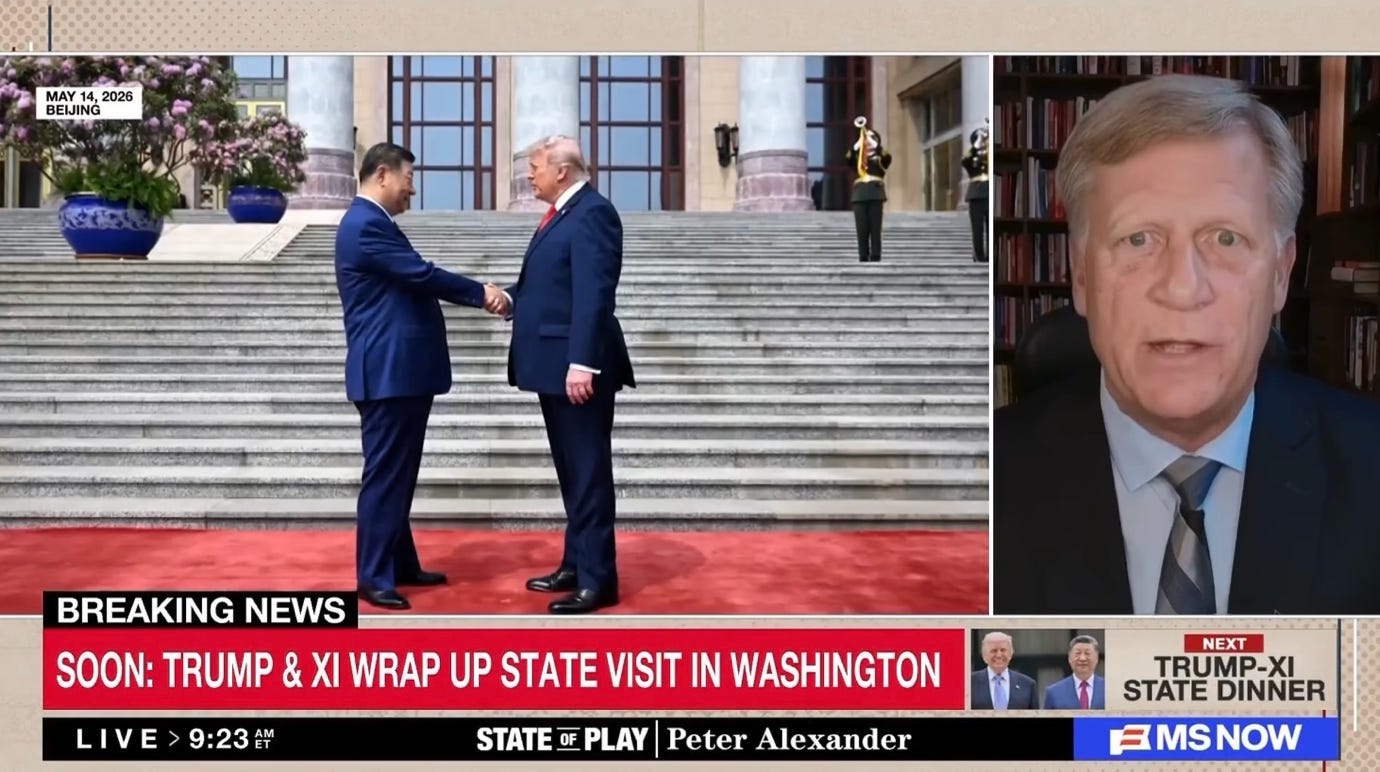
I was also shocked that President Trump chose to personally greet Xi— the communist leader of an autocratic country —upon his arrival at Andrews Air Force Base. The only other foreign leader Trump has greeted in this way was Russian leader Vladimir Putin, in Alaska last year. What message does that send to our allies and adversaries? I worry that Trump is too often awed by power and by leaders he regards as “strong.” Effective U.S. diplomacy requires talking to autocratic leaders. I myself did that as U.S. ambassador to Russia. But when you do, you don’t have to check your values at the door or pretend to be friends. I know that Putin sees such gestures as signs of weakness. I’ll bet Xi does too.
As for the summit itself, as I told Peter Alexander on MS NOW, it was heavy on pageantry and light on deliverables. Take Iran. China is Iran’s number one trading partner. Did we achieve anything on sanctions, or any other agreement on Iran? No. Trade? No breakthrough there either. And what of Min Zin, an American scholar who has been wrongfully detained in China? I didn’t hear Trump mention his name once.
It’s good that we are speaking with China. I wish Trump would remember that these summits are supposed to deliver results for the American people. A “good meeting” is not a goal in diplomacy, but a means for achieving concrete outcomes for Americans.
UNGA
Overlapping with Xi’s visit to the U.S. was the UN General Assembly in New York (though strangely Xi chose to skip it). When I was in the Obama administration, I used to love attending UNGA that week. It’s a time for speed-dating diplomacy and speeches, lots and lots of speeches. In 2009, I had the chance to work on President Obama’s first major address to this body. You can read it here. In that speech, Obama outlined his priorities and described his vision for America’s place in the world.
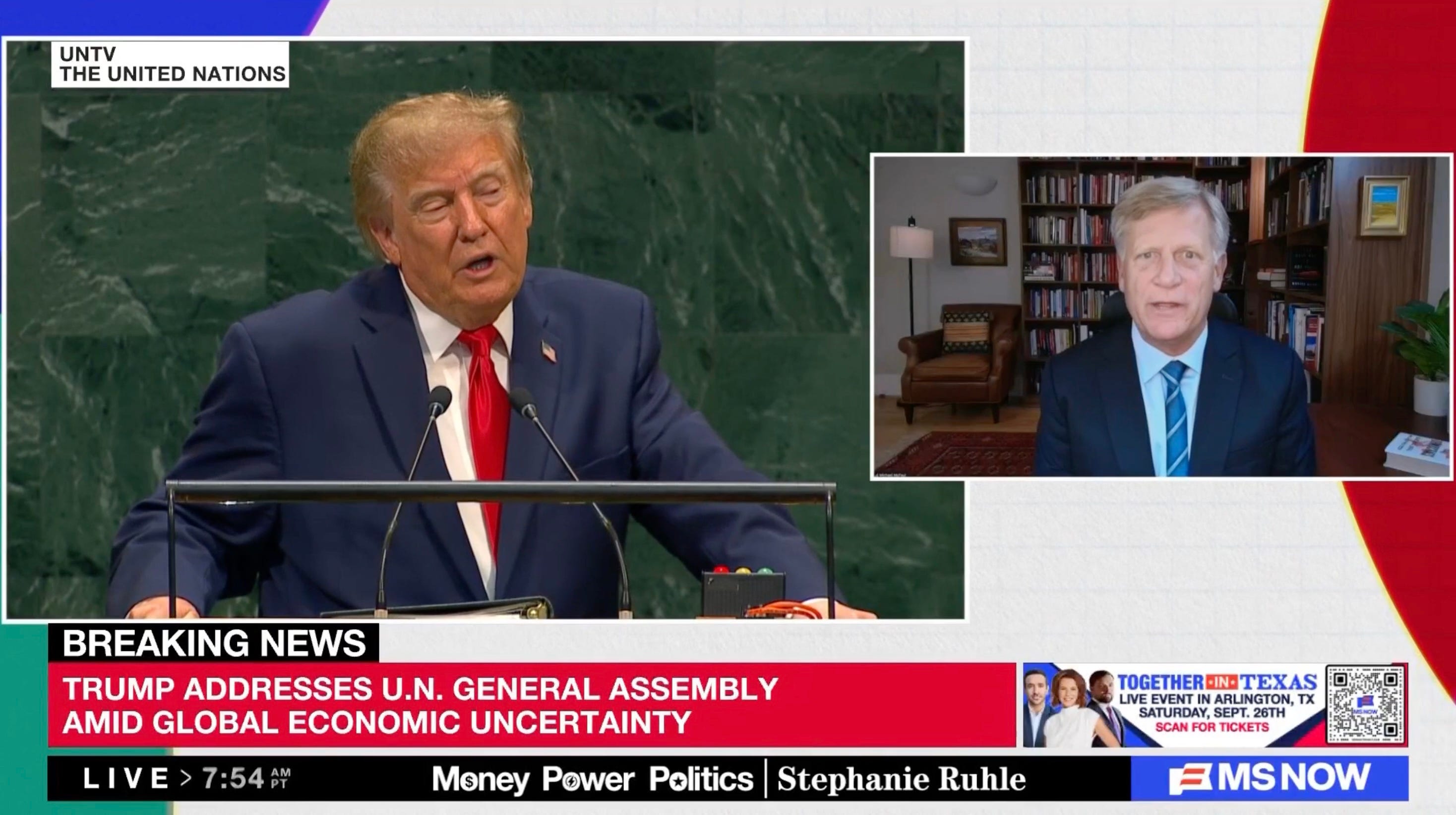
I watched President Trump’s speech this year (I was on TV, commenting on it, so saw the whole thing live) and was struck not only by his focus on his domestic achievements—that part of the speech could have been delivered in Ohio or Alabama on the campaign trail—but also by the lack of inspiration. The audience was visibly bored. Even the president seemed a little bored reading it. Maybe that happens after six years in power?
Greenland
Amid the flurry of headlines from UNGA and the Trump-Xi speech, another significant piece of news may have flown under the radar: the signing of a new security agreement between the United States, Denmark, and Greenland. I hope this will finally put to bed Trump’s ridiculous threats against the semi-autonomous Arctic territory.
News of the agreement came through the previous Friday night—something I found quite peculiar as a messaging strategy. When I worked for President Obama, an announcement like this would have been coordinated and pushed with great fanfare. After all, Trump himself declared the agreement “historic.” But was it?
In Trump’s ‘Historic’ Greenland Deal: Old Wine in New Bottles?, I reviewed the agreement to see what was actually new. The answer? Not that much. Yes, the U.S. will now establish two new military bases, but a 1951 agreement already gave us extensive rights to maintain and expand our military presence on Greenland. The new deal also explicitly bars certain non-NATO countries from establishing military installations and places new restrictions on certain foreign investments in strategically sensitive sectors. But did anyone seriously think Denmark would allow China or Russia to gain a military or economic foothold in Greenland without this deal?
I am happy that this agreement has been signed, if only because I hope it finally puts to bed the embarrassing talk of annexing Greenland. But we did not have to make threats to achieve it. We could have negotiated everything through cooperation with a democratic ally. And those threats came with costs: damaging our international reputation, straining relations within NATO, and giving China and Russia another opportunity to point to what they would describe as American hypocrisy. As I wrote on Substack last year, drawing on my personal experiences of dealing with bullies in middle school on the mean streets of Butte, Montana, no one like a bully. Sometimes we have to put up with them, but we don’t respect them, and we eventually find ways to evade them.
Trump’s foreign policy
Greenland is just one example of a broader point I made this month in Trump’s Foreign Policy Doesn’t Have to Be America’s New Normal.
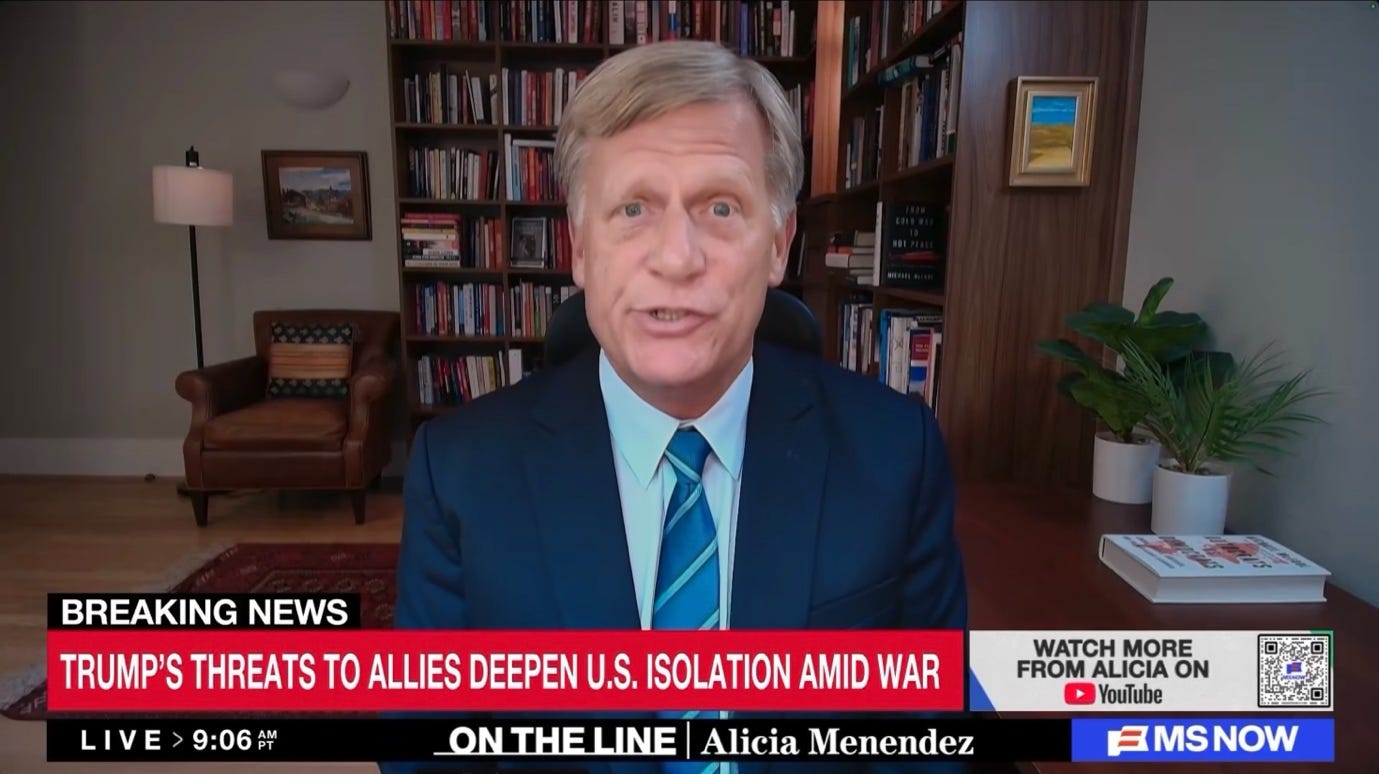
Despite all the talk about Trumpism representing a permanent transformation of American foreign policy, I’m not convinced. Trump is out of step with many Americans on issues ranging from NATO and tariffs to democracy promotion and relations with our allies. Individual leaders—and the choices they make—still matter. That means many of these policies can also be reversed.
If you want to feel a little more optimistic about the future of American foreign policy, give it a read!
Australia trip
I’m taking a sabbatical from Stanford for the next year, but my schedule has still been pretty busy!
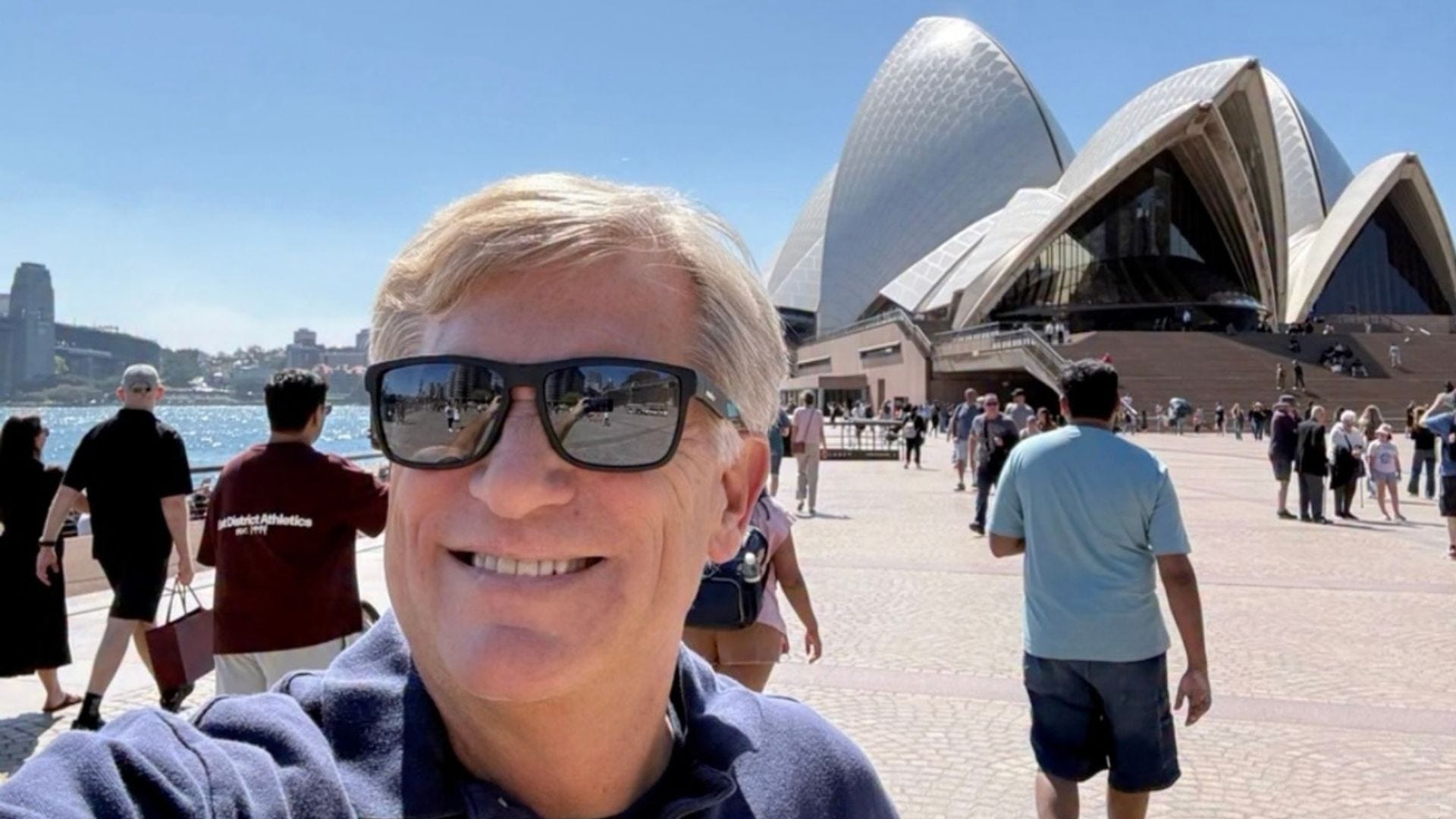
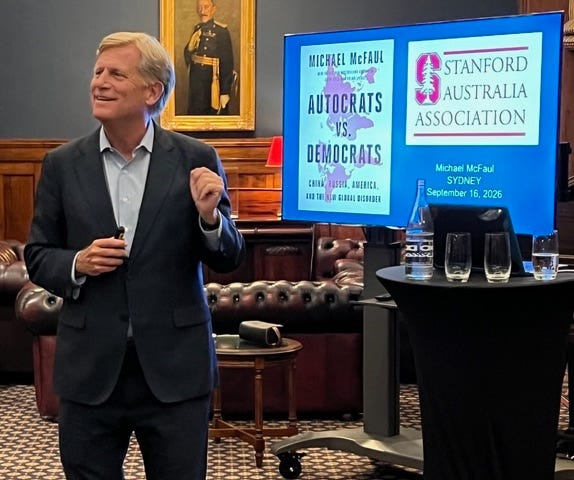
Earlier in September, I traveled to Sydney, Australia, to give two talks about my book, including one with the Stanford Australia Association. The crowd was super engaging, with hard questions and lots of optimism. I also had the chance to talk to some foreign policy experts there, including Michael Fullilove, the head of the Lowy Institute. They do fantastic work. Check them out here.
I came away from Australia with two main impressions. First, there is deep frustration with U.S. foreign policy right now. But second, there is little appetite for Australia—or other American allies—to decouple from the United States. Instead, I heard a desire for America to become a more predictable democratic ally again. I hear you!
Autocrats vs. Democrats
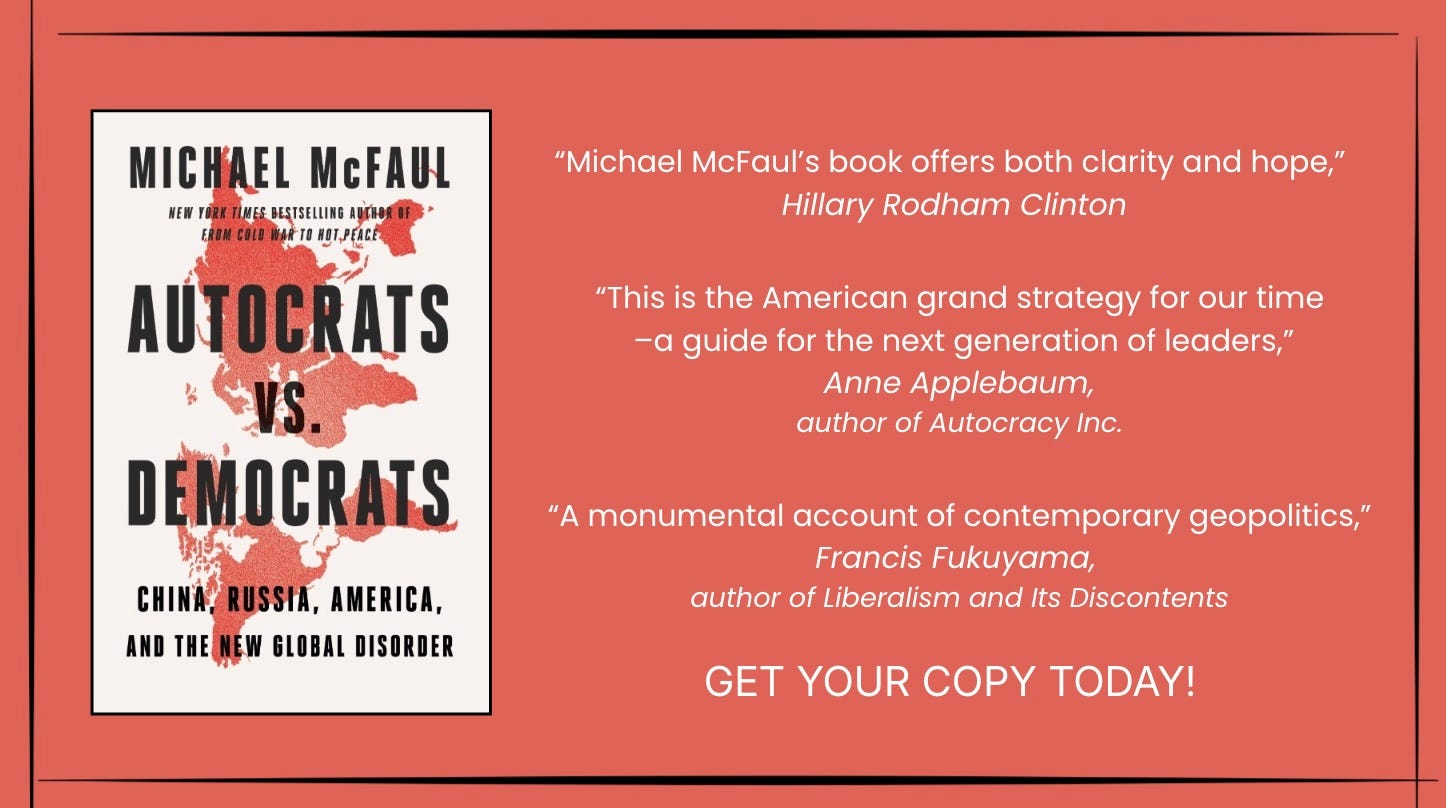
It’s nearly a year since my latest book, Autocrats vs. Democrats: China, Russia, America, and the New Global Disorder, was published.
I know you are tired of my mentioning the book, but please remember that it took me 8 years to write, so I want people to read it! And it’s on sale at a really discounted price— $13—right now on Amazon.
So if anyone is looking for a last-minute birthday present for me, buying my book for yourself is a great option!
That’s all for this month.
Mike
I’ll get your book Mike. I like how you think, we’re not going to survive as a nation without people who know how to think, and have their thinking grounded in the truth. Have a great sabbatical year 🙏🏼
Great post Mike. Enjoy your sabbatical. I hope it’s both productive and restorative. One comment about Trump (and I look forward to the day when his name isn’t in the daily news cycle): he has been actively dismantling American democracy and working against the best interests of the American people. That makes him a traitor in my opinion and I think this should be said out loud everywhere.