

Trump’s Failed War against Iran
Starting an unnecessary war was imprudent. Losing it is Trump’s greatest foreign policy failure so far.

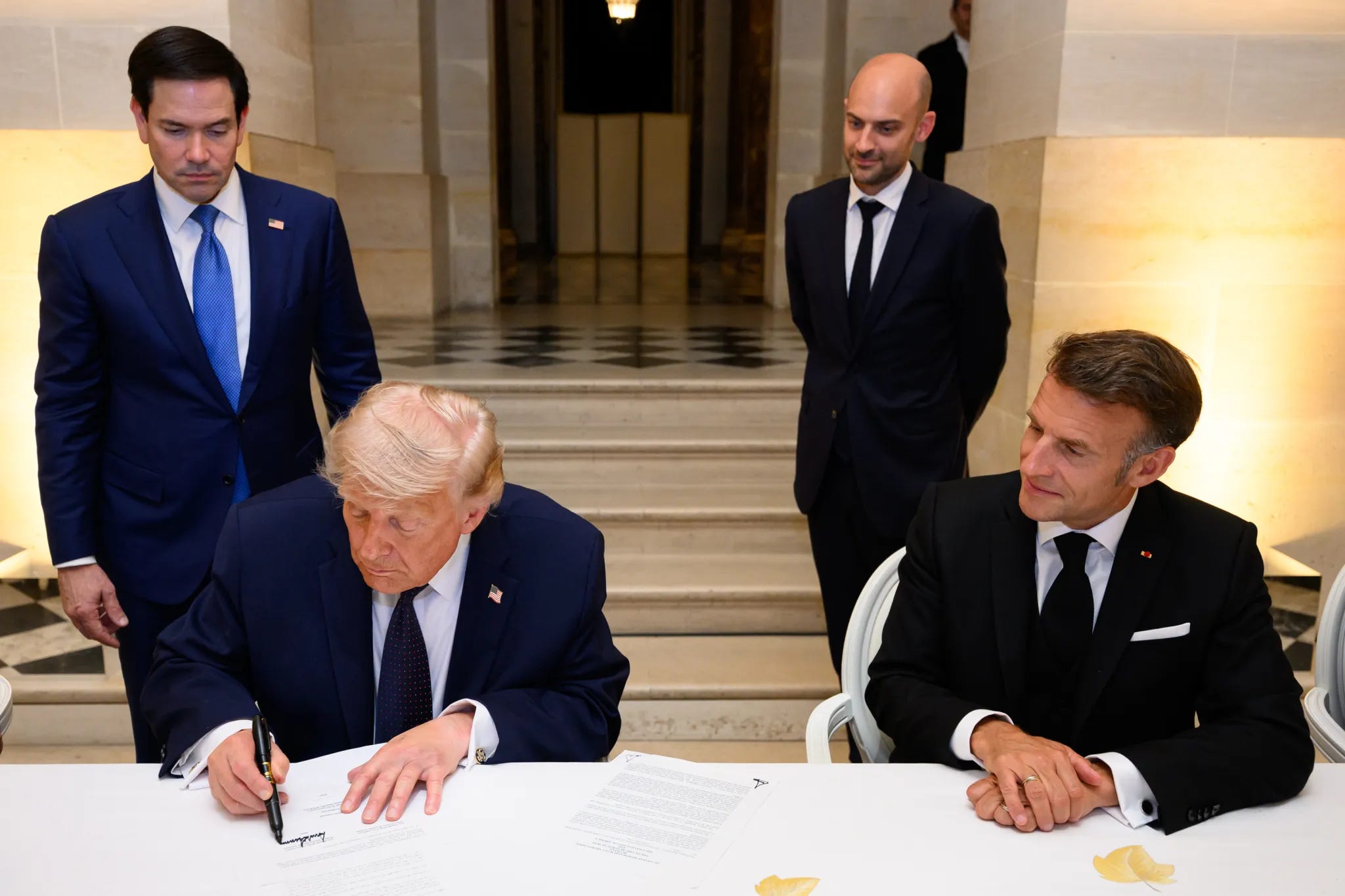
President Trump’s war with Iran and now peace with Iran -- formally codified in a memorandum of understanding (MOU) between Iran and the United States signed by Trump on June 17th in Versailles, France -- have deeply damaged American national interests. The short-term failures have rightly generated considerable attention, but the secondary and tertiary negative consequences must also be included in the assessment to fully appreciate why Trump’s unnecessary war is his biggest foreign policy blunder so far and should rank among America’s greatest foreign policy disasters in decades.
The decision to send our soldiers into battle is the most solemn responsibility of any American commander in chief. War must always be a means of last resort, after all other instruments of American power have been exhausted. The goals of war must also be clear. Americans cannot be ordered into battle to die if our objectives can be achieved by other means or if the aims of war are trivial or ambiguous. Our best presidents also have gone to war with the American people backing them. Explaining and persuading the American people why a war must be fought compels U.S. presidents and their teams to clarify the purpose of this most weighty of decisions.
President Trump’s decision to launch a preemptive war against Iran several months ago never met these basic criteria. The war was not necessary. Iran did not pose an imminent threat to the American homeland. Iran’s decrepit air force and navy had no capability to threaten the United States. Iranian missiles had the reach to attack American bases and other assets in the Middle East, but deterrence was successfully preventing such strikes. Regrettably, President Trump made the imprudent decision in 2018 to withdraw from the Joint Comprehensive Plan of Action (JCPOA) signed with Iran in 2015 that was successfully preventing Tehran from obtaining a nuclear weapon. In response to Trump reneging on this agreement, Iranian leaders did accelerate their production of enriched uranium, thus shortening the time for them to build a nuclear weapon. That was Trump’s fault. Nonetheless, there were still many non-military moves available to Trump and the international community to prevent Iranian leaders from constructing and deploying a nuclear weapon. Moreover, we were told that Trump’s airstrikes against Iranian nuclear facilities in June 2025 set back their program for years if not decades. So why did we need to go to war just a few months later?
Trump may have known that this war was unnecessary at the time. That he decided to go to war without congressional approval and without trying to explain to the American people why we were going back to war in the Middle East suggests that Trump knew it would be a tough sell. (As a committed unilateralist, Trump never even considered seeking endorsement for his war from the United Nations Security Council or NATO.) Instead, Trump hoped for a quick and successful war that would then become popular.
The Unmet Goals of War; the Costly Concessions of Peace
It took them a while to clarify, but Trump and his administration eventually articulated their aims in this war: (1) eliminate Iran’s nuclear program forever; (2) destroy Iran’s missile arsenal and limit future production; (3) end Iranian support for terrorist organizations; and (4) facilitate democratic regime change. After three months of fighting, Trump achieved none of his original war aims.
Regarding Iran’s nuclear program, the war has changed very little so far. In the memorandum of understanding (MOU) between Iran and the United States to end the war, Trump and his negotiators did not obtain any new commitment from the Iranians to reduce, let alone eliminate, their stockpile of enriched uranium. Earlier in the war, Trump and others in his administration argued that this outcome was the paramount objective of their war. Future negotiations might make progress on this issue. So far, however, after three months of war, nothing concrete has been negotiated.
Trump’s war did weaken Iran’s conventional military capabilities. According to Trump administration accounts, American armed forces have obliterated Iran’s air force and navy, while also reducing the number of usable missiles. However, the barrage of American cruise missiles launched and bombs dropped did not do enough damage to Iran’s military capacity to prevent Tehran from closing the Strait of Hormuz, in part because that Iranian military objective was achieved using hard-to-destroy drones. Remarkably and tragically, restraining Iran’s armed forces form attacking ships traveling through the Strait could only be accomplished through economic bribery, including Trump’s agreement – codified in the two-page Memorandum of Understating -- to allow Iran to sell oil again, to gain access to $24 billion of Iranian frozen assets, and most amazingly, a pledge from American partners in the region to provide the autocrats ruling Iran with $300 billion allegedly for reconstruction. The U.S. Navy could not reopen the strait. Only money could.
Of course, reopening the strait was not a goal of Trump’s war because the strait was open before the war began. Neither is the ceasefire signed by Trump earlier this week a return to the pre-war status quo. Instead, the ceasefire agreement pledges to give the dictators in Iran hundreds of billions of dollars that they did not have before.
Since signing the ceasefire, Trump has also backed far away from his original goal of eliminating Iran’s missile stockpile and production capacity. Shockingly, Trump bluntly said that Iran had the right to produce and deploy missiles since other countries in the region were doing the same. Explicitly, Trump expressed sympathy for Iran having these weapons, saying, “If other countries have them, it’s a little bit unfair for them not to have some … If Saudi Arabia and Qatar, and they all have some, I would say, in relative proportion, I think it’s okay.” Critics of the 2015 JCPOA lambasted President Obama and his administration for focusing only on constraints on nuclear weapons and enrichment, and not delivery vehicles. Today, Trump has no interest in trying to place limits on Iran’s missile production. If it happens (I remain skeptical), transferring hundreds of billions of dollars to the theocrats in Tehran will help them reconstitute their missile production.
As for the goal of stopping Iran’s funding of terrorists, Trump and team have said nothing of late. The MOU ending the war does not even mention this issue. It looks like Trump is just giving up.
Giving up is also most certainly Trump’s new intention regarding fostering democratic regime change in Iran. Earlier this year, when the Iranian regime was indiscriminately slaughtering peaceful protestors, Trump urged them to “keep protesting – take over your institutions,” because “help is on its way.” On the night he launched his war in March, Trump stated very clearly that he hoped his war would create the permissive conditions for Iranians to rise up and take over their country. That night, Trump proclaimed, “The hour of your freedom is at hand …When we are finished, take over your government. It will be yours to take.” Operation Epic Fury started with a successful decapitation strike against the Supreme Leader, Ayatollah Ali Khamenei, and many of his closest advisors. At times, Trump even bragged that his war had already accomplished regime change since new leaders were now in power. This week, however, Trump made very clear that supporting the human rights and democratic aspirations of the Iranian people were not policy objectives of his government. Iranian supporters of freedom both inside and outside of the country were devastated.
But no one should be surprised. Advancing democracy abroad has never been a concern for Trump. Just the opposite. He has embraced many dictators around the world, including Putin in Russia and Xi in China, without ever saying a nice word, let alone providing direct support for democratic forces oppressed in dictatorships. Strikingly, however, the MOU Trump signed this week ending the war includes explicit language committing the United States “to refrain from interfering in each other’s internal affairs.”
I was shocked to see this sentence in the agreement. This is the language championed by dictators all over the world. Other American presidents have refrained from interfering in the domestic affairs of dictatorships. But to the best of my knowledge, no president signed an agreement that codifies an American commitment not to support human rights or democratic values in an autocracy, let alone in a brutal dictatorship that holds power in the Islamic Republic of Iran. That was a major concession to the Iranian theocrats for which the United States got nothing in return.
The Other Costs of Trump’s War
All wars are costly. Combatants almost always suffer casualties. Weapons cost money to use. Ammunition used must be replenished. Trump’s war is no exception. The costs of Trump’s war have vastly outpaced the meager benefits.
Most tragically was the loss of life. A dozen American soldiers died, and dozens more were wounded. Inside Iran, thousands were killed, including dozens of children and their teachers in an American strike that Trump still refuses to apologize for. Iranian attacks also killed and wounded hundreds in neighboring countries. The number of casualties in Lebanon from renewed fighting between Israel and Hezbollah triggered by the U.S. and Israeli attack on Iran is measured in the thousands.
Second, the war produced huge economic costs. For American taxpayers, the bill for this war is estimated at least $100 billion. In addition, Americans, as well as most consumers worldwide, have endured skyrocketing gas prices. Costs of all energy-intensive products, especially fertilizer, rose dramatically in the wake of this war. The ceasefire agreement should open the strait and allow for increased shipments of hydrocarbons from the region. That is a welcome outcome for all consumers worldwide, including Americans. But these economic shocks could have been avoided without war.
Third, American military readiness today is now much depleted. Restoring our stockpiles of missiles and ammunition will take years. Our ability to deter a war over Taiwan is much weaker today than three months ago. And our limited supplies of missile defense interceptors (the PAC3s for Patriot systems) mean that Ukrainian civilians will die because of our war in Iran.
Fourth, Trump’s war has strained American ties with allies and partners. Ruptures first flared in Europe when several NATO allies refused to allow American bases in their countries to be used for supporting combat missions in the Middle East. Relations with NATO countries became even more testy when Trump asked allies to help the US Navy reopen the Strait of Hormuz, and the response was tepid from some, outright refusal from others. American allies in Asia also expressed frustration with the war because of the severe economic costs on their societies. Most paradoxically, the way Trump ended the war has triggered new tensions with Israel, and not only with Prime Minister Netanyahu, but also other elements of Israeli society who worry that Trump’s ceasefire, especially its pledges of substantial, new resources for the autocrats in Iran, will only strengthen their enemy over time, long after Trump has lost interest.
Fifth, Trump’s war also strengthened autocratic Russia and China. The Russian economy started 2026 in real trouble, with some experts assessing it was “on the brink of recession.” Trump’s war, however, generated a massive windfall for Putin’s regime after energy prices skyrocketed. Putin’s allies in Tehran are also still in power, a different outcome than in Syria, Venezuela, or Hungary. Xi Jinping and his Communist Party of China also have benefited reputationally from Trump’s unilateral war. Compared to the United States, China appears more like the responsible, rule-abiding, great-power stakeholder in the international order. (For more on the benefits of this war for Putin and Xi, see this essay.)
A final cost of Trump’s war has been increased polarization at home. To be sure, polarization before the war was already high. In decades past, however, national security was often insulated from domestic political divisions, enjoying more consensus between Democrats and Republicans. Remember, majorities in both society and the US Senate supported President Bush’s decision to invade Iraq in 2003. By contrast, Trump’s war against Iran produced no rally-around-the-flag effect.
American Voters Now Get to Decide If the War Was Worth It
In my first essay on the war published on March 8th, I predicted with some accuracy how this war would end:
This war will not end when regime change is accomplished, Iran’s nuclear program is permanently dismantled, a certain percentage of Iranian conventional weapons are destroyed, or financial support for terrorism is depleted. This war will end when Trump decides to end it, regardless of actual progress towards these multiple objectives. He will end the war when he feels like it, just like he explained he started it, based on gut instinct. Then he will, of course, declare victory.
I then concluded that piece by suggesting that the American people will then have to decide if the war was worth it:
And then the American people—first in the mid-term elections in November 2026 and then in a presidential election in November 2028—will have to decide if the costs were worth the benefits. That will be a hard calculation to make if the war’s actual goals have not been articulated by then.
For me, the answer is clear. The costs of this war vastly outweighed the benefits. It was a senseless war that did not advance American security, or prosperity, or our values. Yes, the Iranian military is weaker than before, and Iran’s nuclear program is temporarily crippled. And I still hope that the Iranian regime is so weak and economically challenged today that a democratic popular uprising might eventually mobilize sometime in the future. (That happened in Serbia in 1999-2000. NATO bombed Serbia in the spring of 1999 to stop the slaughter of Kosovars. That attack initially strengthened the dictatorship there. A year later, however, a stolen election triggered a massive protest that overthrew the Milosevic regime.) But that’s a hope, not a prediction. And if such popular mobilization did occur again, Trump would do nothing to help it. Instead, Trump seems to be prepared to work with the autocrats ruling Iran, even pledging to underwrite their consolidation of power.
Regarding all the other major goals of the war that the Trump administration itself articulated, Trump’s war achieved none of them. Trump lost a war that we never should have fought in the first place. And then to end it, he just capitulated to a tyrannical regime in Tehran.
But I’m just one voter. Let’s see in November how the rest of the country evaluates the pluses and minuses of this latest American war.
We must also remember that the MOU, as unsatisfactory as it is, is just a statement of intentions, not a negotiated solution.
Sixty days from now, what will Trump do if there has been no progress in the negotiations? What will he do if Iran starts up a system of "fees or else" for the Strait of Hormuz? My guess is: probably nothing. He will have moved on to the next distraction, whether it is Cuba or something else.
He and his merry band of incompetents are tearing down American power and influence brick by brick, to the satisfaction of our real enemies -- who also happen to be the people Trump admires and wants to emulate.
And he's still got plenty of time to ruin our country. T-minus 947 days and counting...
At least he quit his losses and stopped the war, unlike the other dummies, e.g., W and Obama, who lost wars … and kept on losing forever wars … for “democracy” and “human rights” at the expense of American blood and treasure.
Trump may be a nitwit but he’s a cut above the other dummies when it comes to getting out of wars