


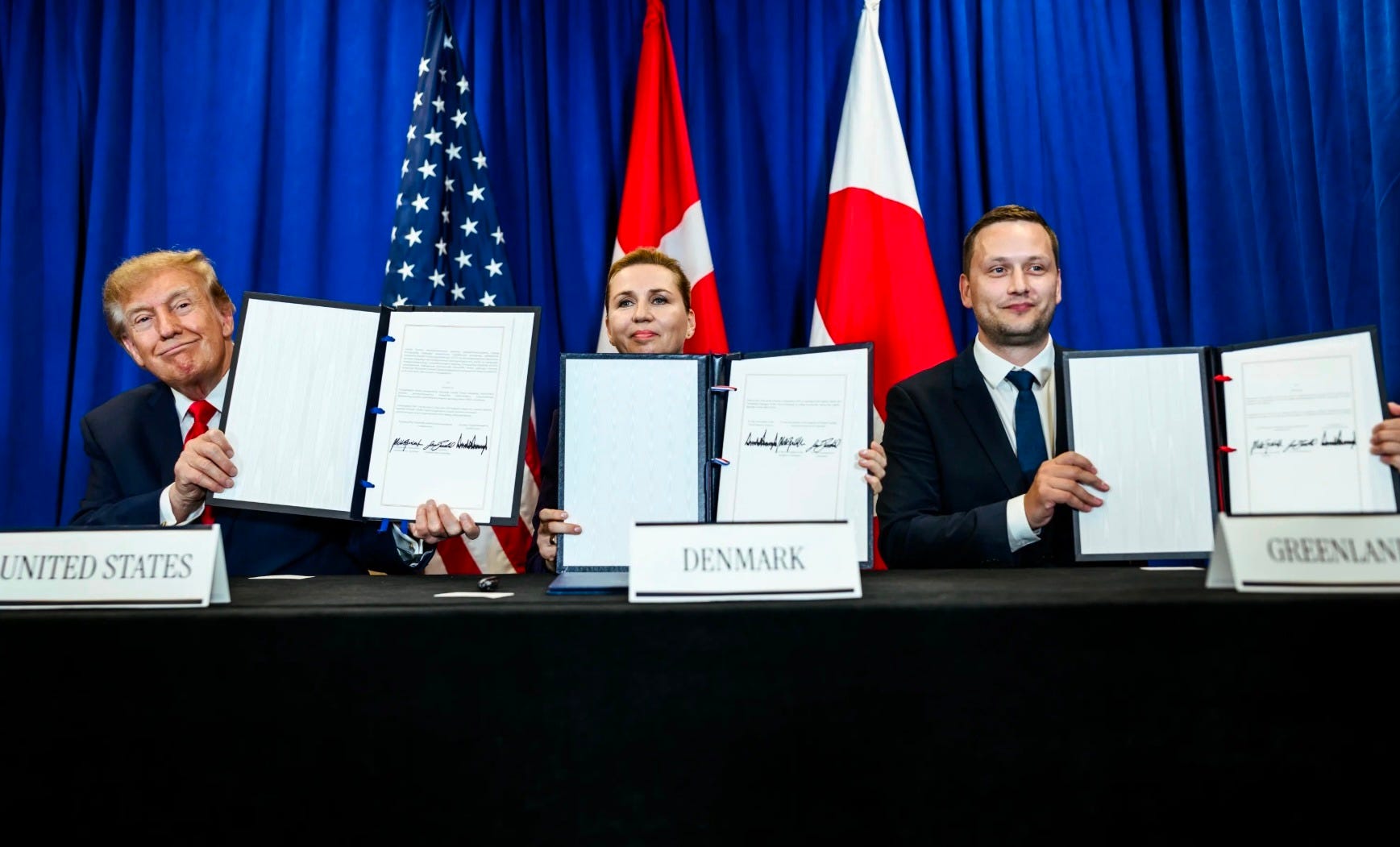
Missed by many in the swirl of coverage of the Trump-Xi summit and United Nations General Assembly meeting was the signing on Tuesday (22 September) of a new agreement between the leaders of Denmark, Greenland, and the United States. I can’t tell whether the White House deliberately wanted to avoid much coverage of the deal. White House officials provided some details of the new accord late on September 18, a Friday night, at which point Trump supporters immediately echoed the same talking points on social media. As someone who used to participate in White House rollouts of foreign policy news during the first three years of the Obama administration, I was impressed last Friday with the message discipline. Everyone emphasized the same talking points—historic achievement, greatest deal ever, Trump is a master negotiator, and the like—and some even circulated colorful charts comparing this deal with the 1951 security agreement signed by the Kingdom of Denmark and the United States on Greenland. At the same time, I wondered why they did this rollout late on a Friday night. The White House press push for the formal signing seemed even muted.
Maybe Trump’s team chose a Friday-night soft launch aimed at core supporters, then did little on the actual day of signing because they know this agreement isn’t historic or revolutionary; it’s old wine in new bottles. I support the signing of the agreement; I am relieved that the immediate crisis in US-Denmark and US-NATO relations appears to be over, and that this embarrassing saga of Trump threatening to invade Greenland has come to an end. But let’s be clear: based on what we know so far, the “historic agreement” declared by Trump looks much more like a tweak to security arrangements that have been in place for decades than any dramatic new deal.
First, according to President Trump’s Truth Social post on 18 September, the U.S. “will immediately begin the process of developing a large Military presence in the appropriate part of Greenland, of which there are many [sic].” The text of the agreement published this week made clear that the US would establish two new defense areas: one at Narsarsuaq, in southern Greenland, and one at Mestersvig, in the east.
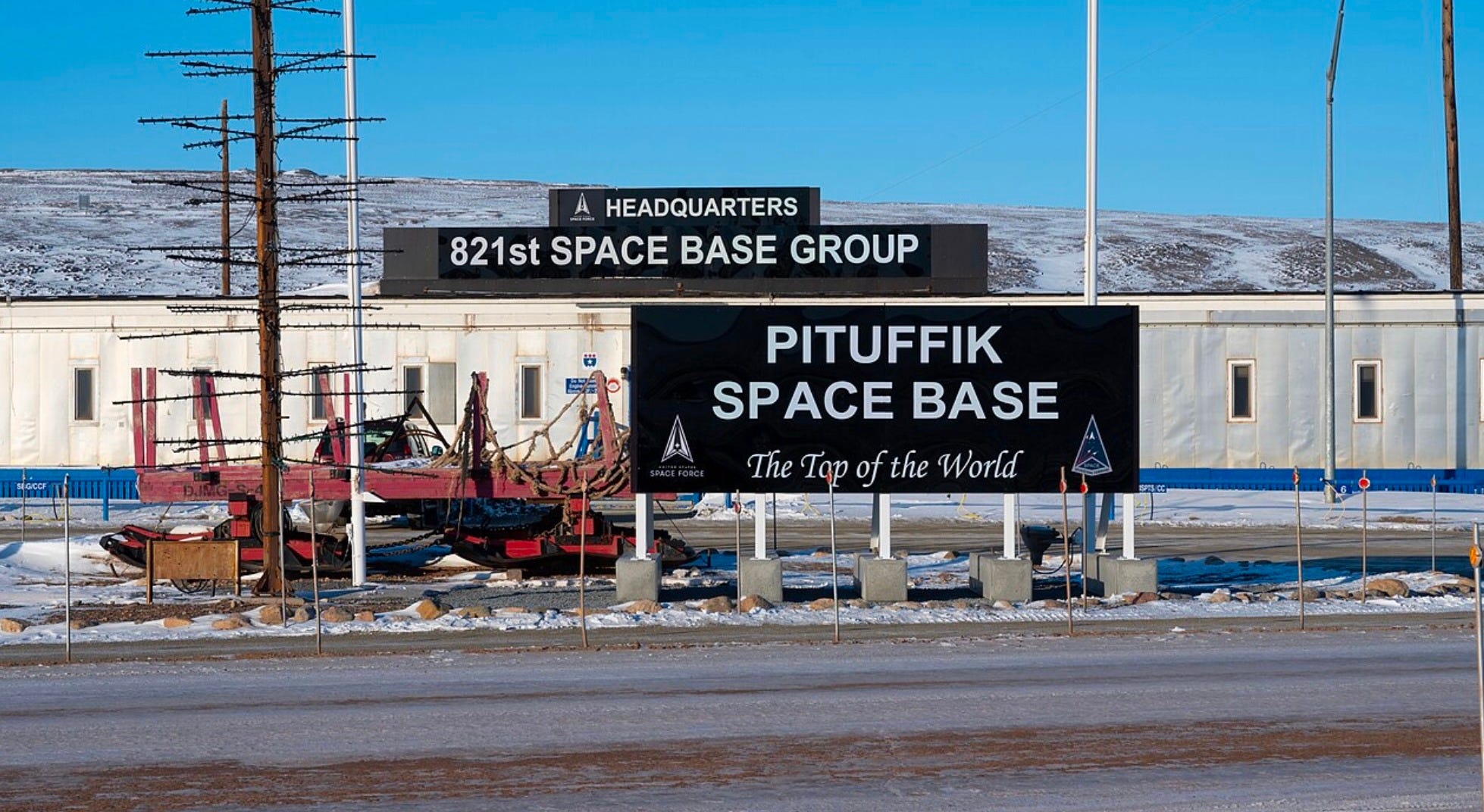
That’s not new. We didn’t need a new agreement to open these new bases or any future bases. Under the 1951 agreement with Denmark (Greenland was not a signatory), the U.S. already enjoys extraordinary rights to support and maintain a military presence in agreed defense areas. This includes the right to “improve and generally to fit the area for military use,” including the authority to “station and house personnel,” “to improve and deepen harbors, channels, entrances, and anchorages,” and even “to establish and maintain postal facilities and commissary stores.” Indeed, the U.S. has operated military bases on Greenland since World War II, including more than a dozen during the Cold War. It continues to operate Pituffik Space Base (formerly Thule Air Base) in northwestern Greenland, and Narsarsuaq, where the U.S. now plans to establish a new base, hosted a large American airfield during World War II. Expanding our military presence on Greenland is something that could have been negotiated without the threats of invasion and annexation. Denmark has been our loyal democratic ally for a long time. Trump did not need to threaten to invade our ally to achieve this outcome.
Second, Trump and his supporters are hailing as a breakthrough concession the ban on non-NATO member states (e.g., China and Russia) establishing manned or unmanned military installations in Greenland. Again, little will change in practice. While the 2026 agreement makes this explicit, the 1951 agreement placed Greenland’s defense firmly within a NATO framework and was negotiated at NATO’s request. Neither Russia nor China has bases on Greenland for the obvious reason that our ally Denmark would never allow it! Denmark is a major supporter of Ukraine. Who honestly believes that they would let Russia build a base there? (If Trump really wanted to enhance our defense posture against Russia, he would be providing Ukraine with more weapons and providing more sanctions against Russian companies.) The possibility of China building a base in Greenland was even more remote than Russia doing so. Even the Russians do not want to see China opening bases in the Arctic region. The probability of China aspiring, let alone achieving, an agreement on opening a base in Greenland was near zero, if not zero.
Third, the new agreement seems to give the US a greater say over foreign investment in Greenland. It states that, unless otherwise agreed by the parties, investors from non-EU states that are neither members nor partners of NATO shall not be allowed to control or significantly influence sensitive sectors of the Greenlandic economy, or access non-public information where this may threaten national security or public order. That’s perhaps the most significant concession I can find in the new text. But does anyone seriously believe Denmark or the government of Greenland would have given China or Russia such access or influence without this agreement in place? When I was in Copenhagen a few years ago, my impression was that they are very sober minded about the free world’s autocratic competitors. In fact, I’d say they understand this threat a lot better than Trump, who courts both Putin and Xi.
Fourth, I have seen some praise for the fact that the agreement has no end date. This differs from the 1951 agreement, which stated it would remain in effect as long as NATO continues to exist. NATO is already the longest-lasting alliance ever; I see no serious threat of it dissolving anytime soon. If you were worried about NATO’s future, I guess this clause could be considered an achievement, but only if you actually believe in international law – that such agreements are binding on the signatories. Trump has given us reason to be skeptical. He has torn up numerous agreements before they expired and has gone back on deals that he himself signed. I remember how relieved Canadians were when the North American Free Trade Agreement (NAFTA), which Trump had heavily criticized, was replaced by his own agreement, the USMCA. Yet earlier this year, Trump’s administration started a new trade war with Canada despite that agreement. So, let’s be realistic. Nothing in international law lasts forever.
Fifth, the new agreement maintains the status quo regarding Danish sovereignty over Greenland and even includes a provision for its continuation if Greenland gains independence from Copenhagen. Trump supporters who posted maps showing Greenland as part of the US or controlled now by the United States are grotesquely inaccurate and insulting to the citizens of Greenland and Denmark. Trump did not buy or annex Greenland. The US does not have sovereignty over it. In fact, the new agreement explicitly reaffirms the sovereignty and territorial integrity of the Kingdom of Denmark and recognizes the right of the people of Greenland to self-determination.
Most significantly, Trump’s new deal was not cost-free. His threats to annex Greenland have been very damaging to US-Denmark relations and NATO unity more generally. Coupled with his decision to go to war with Iran, his tariffs on most countries in the world, his criticism of democratic allies and alliances, and more recently his trade war with Canada, America’s reputation worldwide has taken a hit. Polls show a dramatic deterioration in views of the United States worldwide, even among allies, and a rise in China’s reputation. Trump’s bullying of Denmark over Greenland has contributed to this decline in respect for the United States. As I have written about earlier—see my essay here comparing the streets of Butte, Montana to international politics—no one likes a bully.
So, I’m thankful that this agreement has been signed to finally retire this ridiculous idea of annexing Greenland. But I worry that Trump and his admirers might learn the wrong lesson from this “deal”—that bullying works. That would be a most unfortunate outcome. Cooperation, not coercion, could have achieved everything in this deal at a much lower cost. Countries sometimes acquiesce to bullying, but they don’t like it. Eventually, as the Canadians are demonstrating and the growing chorus of supporters of a middle-power coalition shows, they start to push back. In our new era of great power competition with China and Russia, we need our allies, more than a new agreement, which looks a lot like the old agreement, on Greenland.
I do very much agree with you.
Most Danes - including myself - have lost any trust in most Americans. I do very much welcome and support the new relationship between Canada and Europe.
A good piece; thanks for that.
Thank God it's over but I fear we've lost the Danes for good. I travel regularly to Denmark and I can tell you the mood change towards the U.S. is dramatic.
This was one of the stupidest in a long line of self-inflicted foreign policy wounds of the last years. The sheer fecklessness of it takes your breath away. Ugh.