

Why and How the U.S. Should Support Democracy in Iran
Trump has options to support democratic change in Iran. Why isn’t he using them?

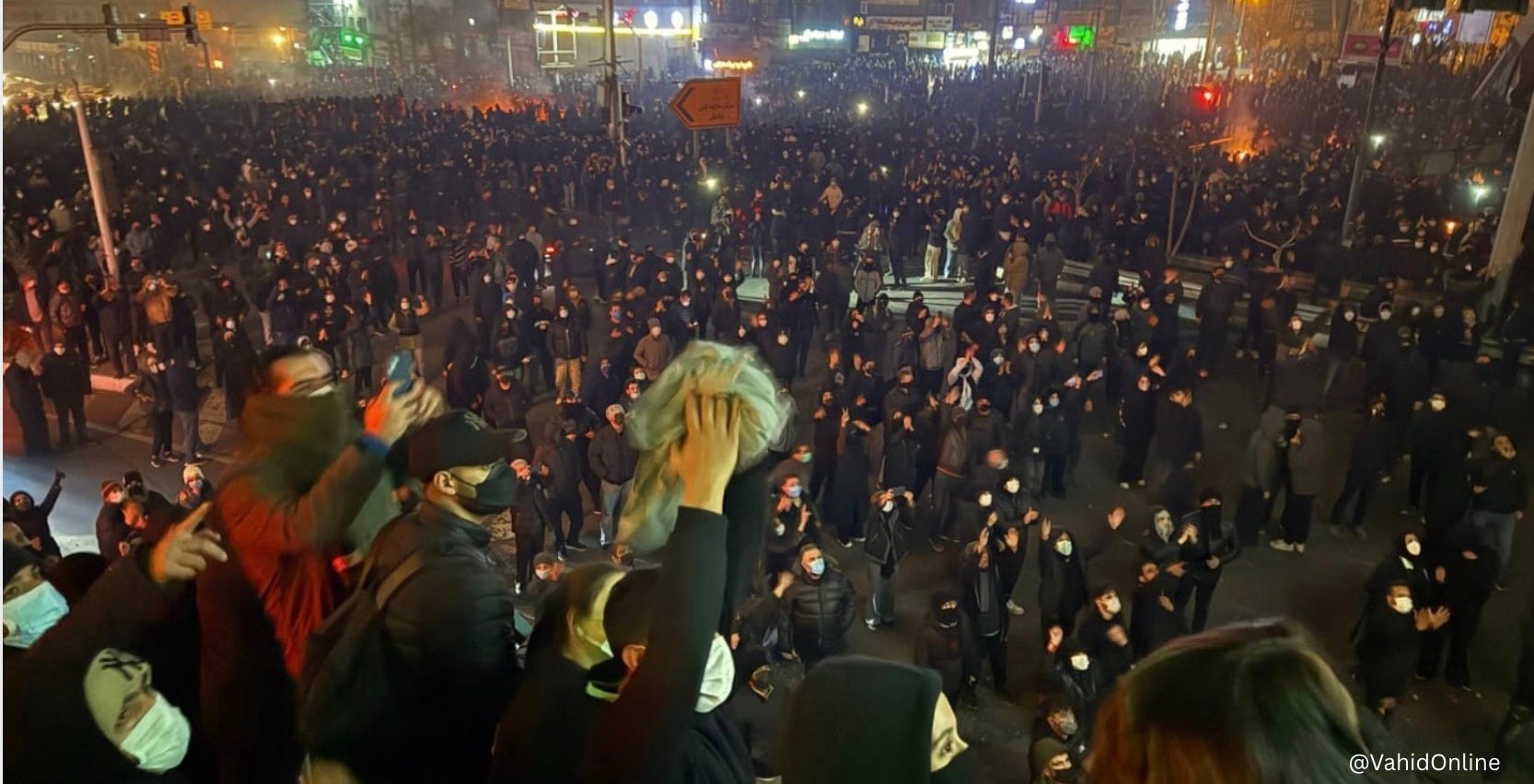
The theocrats ruling Iran have never been weaker than they are today. Although peaceful social movements in support of democracy have mobilized episodically throughout their tyrannical rule, the scale of societal mobilization that began in December 2025, sparked by severe inflation, has never been greater. It has included not just Tehran and other major cities, but virtually every region and village in the country. To hold on to power, Supreme Leader Ali Khamenei and his ruthless henchmen in the Islamic Revolutionary Guard Corps (IRGC) have slaughtered tens of thousands of peaceful protestors. Violent repression reduces population mobilization, and the demonstrations have abated for now. But the autocratic regime has now lost all legitimacy, as well as what my Stanford colleague Abbas Milani called its “aura of invincibility.”
The regime’s weakness at home has been matched by increasing weakness abroad. Iran’s terrorist proxies, Hezbollah and Hamas, have been severely damaged by the Israeli counterattacks launched in response to the terrorist attack on 7 October, 2023. Then, in 2024, came the fall of Tehran’s close ally in the region, Syrian President Bashar al-Assad. It doesn’t seem that the theocrats can rely on their supposed allies in Russia or China, either. In June 2025, when President Trump launched military strikes against Iranian nuclear facilities, neither country came to the aid of the mullahs—even though the Islamic Republic provides military assistance to Russia, and exports oil to China. If Khamenei’s regime were to start crumbling, it’s clear that neither Putin nor Xi would come to his rescue.
At this time of peak societal resistance and obvious regime frailty, it appeared that the free world, in general, and the United States, in particular, was ready to help tilt the balance of power within Iran toward the democrats. U.S. President Donald Trump, rarely a champion of democracy promotion abroad, encouraged Iran’s democratic activists to “keep protesting” and “take over your institutions.” Most amazingly, he declared in a Truth Social post: “Help is on the way.”
And then… nothing. Maybe the United States is providing covert assistance to the Iranian democratic movement, about which the public is unaware. But, publicly at least, Trump’s focus on Iran has shifted away from fostering democratic regime change and back towards limiting Iran’s nuclear weapons program. The USS Abraham Lincoln aircraft carrier and its accompanying ships have already sailed into the theater, a show of force to compel the mullahs to end their nuclear enrichment program, limit their ballistic missile production, and end their support for terrorist organizations. Democracy in Iran, however, has fallen off Trump’s list of objectives. On February 6, Iranian and American officials even held talks in Oman, which Iran’s Foreign Minister Abbas Araghchi called “a good start.” After the meeting, however, Araghchi said that the agenda had been “exclusively nuclear” and that Iran was “ not discussing any other issues with the Americans”.
That meeting, with its reportedly narrow agenda, was a mistake. Iran’s repressive dictatorship has never been weaker. More pressure from the free world, including first and foremost from the United States, could finally tip the scales in favor of the democrats. Conversely, negotiating a nuclear deal with Khamenei now will throw his oppressive regime a lifeline. Trump and other leaders of the democratic world must prioritize the human rights of courageous Iranian protestors. Abandoning them (again) to secure a new nuclear deal (which, after all, should be unnecessary since Trump claimed that we obliterated their program back in June) is immoral. It is also not in the long-term interests of the United States. The best way to end the Iranian threat to the region and the world permanently is to support peaceful democratic regime change inside Iran.
Why A Democratic Iran Serves U.S. National Interests
Hostility toward the United States is a defining feature of Iran’s current theocratic regime. A democratic Iran, however, would have strong economic, security and societal incentives to align with Washington. Generally, throughout American history, Washington has enjoyed closer relations with democratic countries. Conversely, almost all of America’s enemies have been dictatorships. Relations between Israel and a democratic Iran would also improve. The theocrats ruling Iran want to see the destruction of Israel and believe that nuclear weapons are necessary to deter American attacks; a democratic Iran would have little need for nuclear weapons or for supporting terrorist organizations. Iranian energy exports, especially if American investment returned to the country, could expand tremendously, driving down oil prices and weakening Putin’s dictatorship. And more generally, a highly educated and entrepreneurial society, connected once again to a very successful Iranian diaspora in the United States, could become an engine of economic growth for the free world.
Of course, devising a sophisticated and comprehensive strategy to facilitate democratic regime change is hard. And even the best executed plan does not guarantee success. Dictatorships created through revolution and sustained by violence rarely crumble easily or peacefully. But trying to implement such a strategy to promote peaceful democratic change is not only the more ethical policy, but also the more pragmatic course of action compared to the alternatives. Doing a deal with Khamenei guarantees more killing of innocent Iranians, keeps alive the possibility of Tehran restarting a nuclear weapons program and restoring aid to terrorists, and leaving in place an ally for autocratic Russia and China. None of those outcomes serves American national interests.
Shifting the Balance of Power in Iran towards the Democrats
The United States has an imperfect record for supporting democratic change abroad. The most extreme method—military intervention—has only produced democracies in four out of 17 cases, and the record of covert operations to facilitate democratizations is equally spotty. (For the details, see my book, Advancing Democracy Abroad: Why We Should and How We Can.). More peaceful methods—providing economic and political assistance, supporting democratic ideas through international media, educational training programs, sanctions, and diplomacy––have produced better results, but not recently. Democratic breakthroughs, once facilitated by the United States in the 1990s and 2000s, are now much rarer. And during certain periods, including today, U.S. presidents do not even try to support democratic ideas, leaders, or movements abroad. But when American administrations have decided that democratic change advances our values and interests abroad, there have been notable successes—for instance, in post-communist Europe as well as in countries that previously maintained friendly relations with the United States, like Chile, South Korea, the Philippines, and South Africa.
If Trump and his team truly want to help democracy in Iran, they have many policy options available. The list below is intended to be illustrative, not exhaustive, and it does not include military intervention. In fact, it is unclear whether another U.S. military attack on Iran would weaken the regime or not. But the following three actions, if taken by the United States and the rest of the free world, would help strengthen the democratic opposition in Iran at a crucial moment:
First, the United States and its democratic allies could provide desperately needed communication equipment to Iranian society, for which the regime’s crackdown on the internet has been stifling. Delivering Starlink terminals into the country for use by the democratic movements is the obvious first move (and individuals can donate to help fund that effort right here). Support for NGOs such as NetFreedom Pioneers should also be expanded. Other groups are working on new technology to allow direct connection from cell phones to satellites. (Read more about direct-to-cell satellite internet here). These efforts could be supported by the U.S. and its democratic allies. More external support to expand the number of working VPNs (Virtual Private Networks) to connect to Starlink and access the global internet would also help. Another action would be to increase funding for independent Persian-language media, both inside and outside the country. The Iranian dictatorship has proven relentless and ruthless in shutting down the information space, but it is not the first autocracy to do so.
Second, the United States and its democratic allies could provide greater funding and technical assistance to Iranian pro-democracy non-governmental movements. Most efficiently, as has been done in the past, the U.S. Congress could provide supplemental funds to the National Endowment for Democracy, earmarked to increase support for human rights and democratic Iranian organizations working both inside and outside the country. This would allow the NED to scale up the work on Iran that is already being done.
Third, President Trump and the rest of the democratic world could publicly give legitimacy to the democratic movement inside Iran. For instance, without endorsing any leader or movement, Trump could hold a public meeting at the White House with exiled Iranian human rights and democratic leaders. That meeting could include a mix of influential Iranians, such as Nobel Peace Prize winner Shirin Ebadi, now-exiled leaders from the Woman, Life, Freedom (WLF) movement that emerged from the 2022-2023 protests, and even Crown prince Reza Pahlavi, the last shah’s son. One dictatorship cannot be replaced by another, but Pahlavi has pledged to serve as an interim leader to facilitate a transition to democracy, and interim leaders and provisional governments, including sometimes monarchs, have proven consequential in other successful democratic transitions. (See, for instance, Yossi Shain and Juan Linz, Between States: Interim Government and Democratic Transitions.) Prominent Iranian-American business leaders could also join to signal their interest in helping to develop the Iranian economy after democratization. Acknowledgement from Trump and other democratic leaders would help to undermine the claim that the democratic forces have no leader or organization.
To weaken the autocratic regime in Iran, the United States and the rest of the free world could take three immediate actions:
First, sanctions could be expanded massively against all individuals and institutions—not just some—connected to the regime. In late January, the European Union finally designated the IRGC as a terrorist organization. That’s good news, and it should have happened long ago. But there’s more to do. According to the Central Bank of Iran, energy exports generated $65.8 billion for the Iranian calendar year ending in March 2025. OPEC’s estimate for 2024 was $46.8 billion. Others estimated that total revenue from fossil fuel exports was $60 billion in 2025. These figures suggest that more could be done to strengthen the sanctions regime and reduce revenues supporting the dictatorship. Most immediately, the United States and its allies must impose sanctions on the Supreme Leader, his family, and all officials tied to the current regime. In addition, all tankers shipping Iranian oil should be sanctioned, just as ships transporting Russian oil are. Democracies should also suspend diplomatic relations with Tehran until a plan for democratic transition has been finalized.
Second, the United States and the free world could allow Iranian oil to be sold, but the proceeds would be held in an escrow account controlled by the United States and released to the Iranian government only after a democratic transition. The Obama administration used this mechanism effectively to persuade the Iranian government to abandon its nuclear weapons program. The same tool could be used to pressure the Iranian dictatorship to engage in a process of democratic transition.
Third, assets controlled by the leaders of the Iranian regime abroad must be frozen immediately. Recently, a detailed investigative report by Bloomberg revealed that Khamenei’s son has assembled “a global property empire.” Those assets must be seized and placed in a foundation that could then be used to support economic development in a post-autocratic Iran.
If the balance of power within Iran between autocrats and democrats becomes more equal, American and European mediators could facilitate negotiations between elements of the old order and leaders of the new democratic movement to agree on a roadmap for Iran’s transition from autocracy to democracy. “Pacted transitions,” as they have been labeled (read about that idea here), are morally unsatisfying because they often require that some leaders of the autocratic regime remain in power while others are allowed to flee into exile. Successful pacts have also protected the property rights of those businesses tied to the old dictatorship. But these kinds of arrangements worked in Chile (1988), Poland (1989), South Africa (1990-1994), and Ukraine (2004), helping to avoid complete state collapse and civil war. And sometimes an initially pacted transition has created the permissive conditions for a later full-scale democratic breakthrough. That’s what happened in Poland in 1989. It could happen again in Iran today.
Is Trump Serious About Supporting Democracy in Iran?
As noted above, the list of actions above that could be taken to foster democratic change in Iran is meant to be illustrative, not exhaustive. Some of these ideas may prove to be too risky or too impractical when interrogated closely through an inter-agency process run by Trump’s National Security Council. That’s to be expected. But my point in suggesting these policy ideas is that Trump, in his vernacular, “has cards to play”, should democracy promotion be the goal.
To date, however, there is little evidence to suggest that Trump cares about supporting the democratic movement in Iran. Instead, he seems more focused on engaging with Iran’s autocratic regime to secure another nuclear deal. I worry that those Arab monarchies, with close ties to the Trump administration, also have no interest in seeing a democratic Iran emerge.
That is tragic. The current rulers in Iran have killed too many innocent people to be engaged in arms control negotiations now. We should be supporting a deal on democracy, not a deal on enrichment. At least, we should try. The moment for a democratic breakthrough in Iran has never been more ripe or more needed.
I fear Trump and his team disagree with me. I hope I’m wrong.
We might have to fix “our house” first.
The cognitive dissonance I felt when DT told the people of Iran who were rebelling against the repressive regime there to essentially “hang on”
because help was on the way, was significant. When I didn’t hear any
further statements from DT about
helping the democratic rebellion in Iran, I assumed someone in Trump’s
regime reminded him of his mission to stamp out democracy and replace it with an autocratic theocracy, much like Iran’s.
Please don’t misunderstand me Ambassador McFaul—I appreciate your meticulous “prescription” for the advancement of democracy in Iran,
but it does add to my longstanding cognitive dissonance about where the U.S. is headed in the grand scheme of world affairs. Personally, I view the current years-long attempt to replace our democracy with a repressive theocratic system of governance as a
temporary, but painful prelude to a
revitalization of our democratic ideals.
I admit I occasionally backslide from
that viewpoint from time to time, but
I think your prescription for Iran is also illustrative of exactly why a repressive theocracy will not be our fate. The
people of America have only known freedom since its inception. Over time we’ve always become more tolerant of cultural choice in important matters like religion, marriage, education and
scientific advancement.
We’ve always more or less welcomed those from other cultures who’ve been willing to adapt their culture to ours. Yes, there have been hiccups in our tolerance of others who are “different,” but we’ve always, over time, accepted and even celebrated differences. That is our heritage. Mean-spirited, repressive intolerance and strict adherence to a religious belief system without exception will never gain traction in the U.S. because we have never accepted it as a country.
The beauty of America has always been in its freedom of choice. If you
want to live with strict religious beliefs
you can do so, but you can’t force
others to live that way. We’ve always been a society of laws that apply equally to everyone. Autocracy/theocracy does not allow for laws that
apply equally to everyone. Autocratic regimes make exceptions for those who are perpetuating the regime.
In other words, the ruler or autocrat unfairly decides what the laws are for everyone else, and they are subject to change on the autocrat’s whims. Thus
it’s inherently unfair and dictatorial.
Americans will never agree to live that way once they understand what it is. I
firmly believe the only reason Trump’s repressive regime has come this far is because most of its adherents have no understanding of what it’s about.
What it’s about is having a repressive regime of sycophants who do what they want, whether it’s rigging the economy in their favor or raping little
girls, there are no restraints on them.
The restraints are on everyone else.
That will never work in America. The
very same people who claim to want it
will never agree to live that way once they understand it. The only question is how far in that direction we will go before they realize it. The people in power know their army of thugs called “ICE” won’t perform if they can be identified and called out for what they are doing by their neighbors, relatives
and friends. That’s all we need to know about where this is headed.