

NATO Lives On
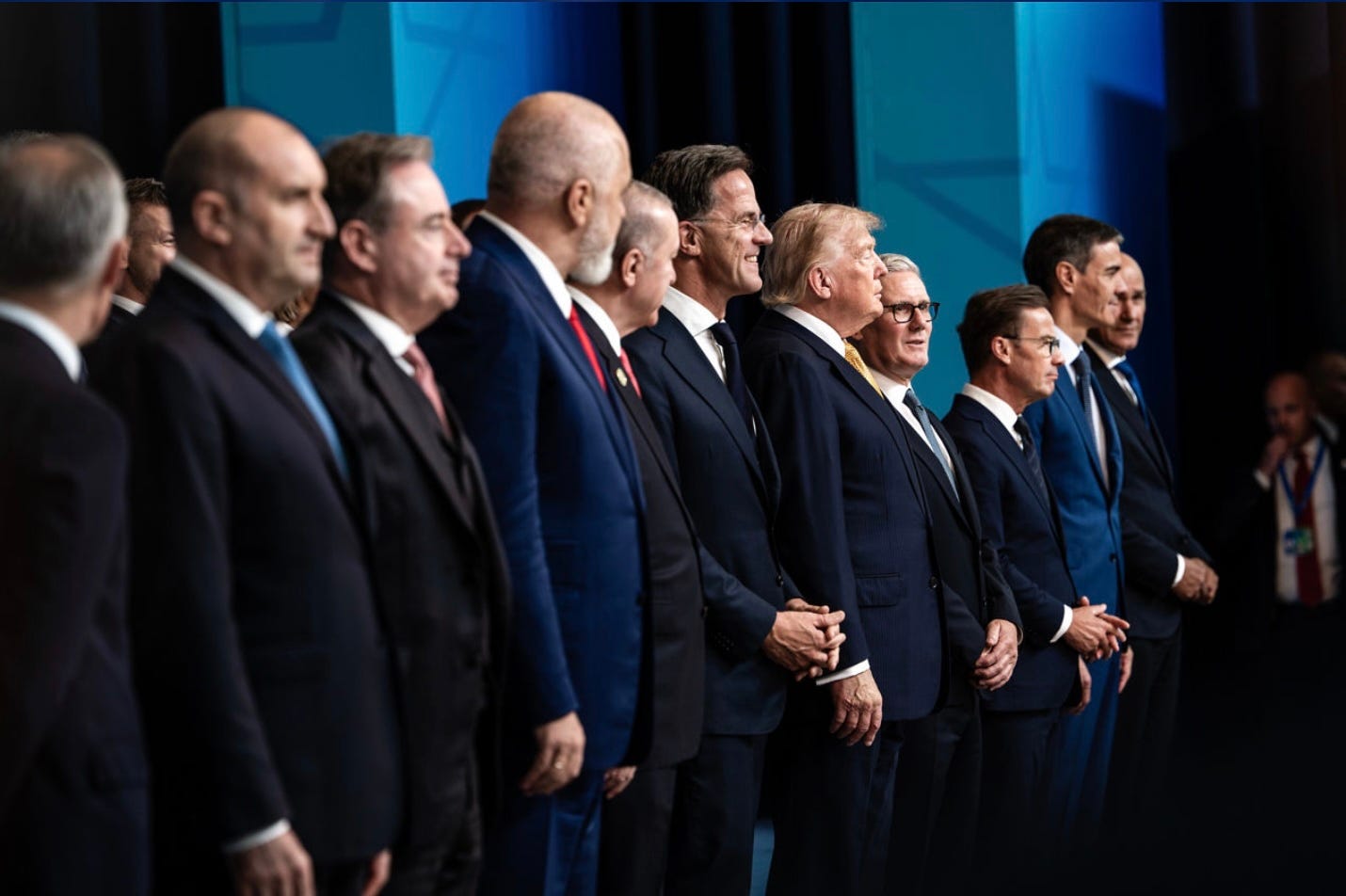
The NATO Summit in Ankara this week produced some positive results and avoided a major blow-up between the US and Europe.

I just returned home after an 11-day trip to Estonia, Finland, and Sweden. The trip was part work, part fun. In the work meetings, every discussion focused on the future of America’s commitment to Europe, especially NATO. For me, as a firm believer in the benefits of NATO and transatlantic cooperation more generally, the conversations were mostly depressing.
President Trump has raised deep anxieties in Europe and Canada about the future of NATO and transatlantic relations. Repeatedly, he has berated our NATO allies for not doing enough to defend Europe on their own. Trump’s National Security Strategy, published in 2025, sounds more belligerent towards our European allies than our autocratic adversaries. (Shockingly and insultingly, it warns of “the real and more stark prospect of civilizational erasure” in Europe, accuses the EU and other transnational bodies of “undermining political liberty and sovereignty,” and more broadly takes aim at migration policies on the continent.) Trump has recently become even more agitated with many NATO allies, Spain in particular, when they failed to join him in his war with Iran.
Trump doesn’t seem to realize that NATO is a defensive alliance, not an expeditionary force. He only consulted with Israel, not NATO allies, about his decision to attack Iran, and was then surprised when European partners did not join in the fight. He has repeatedly fueled division with NATO by threatening to annex Greenland and joking about making Canada the 51st state. Regarding support for democratic Ukraine in its fight against imperial autocratic Russia, Trump dramatically cut American aid, leaving the burden of assisting Ukraine to European allies.
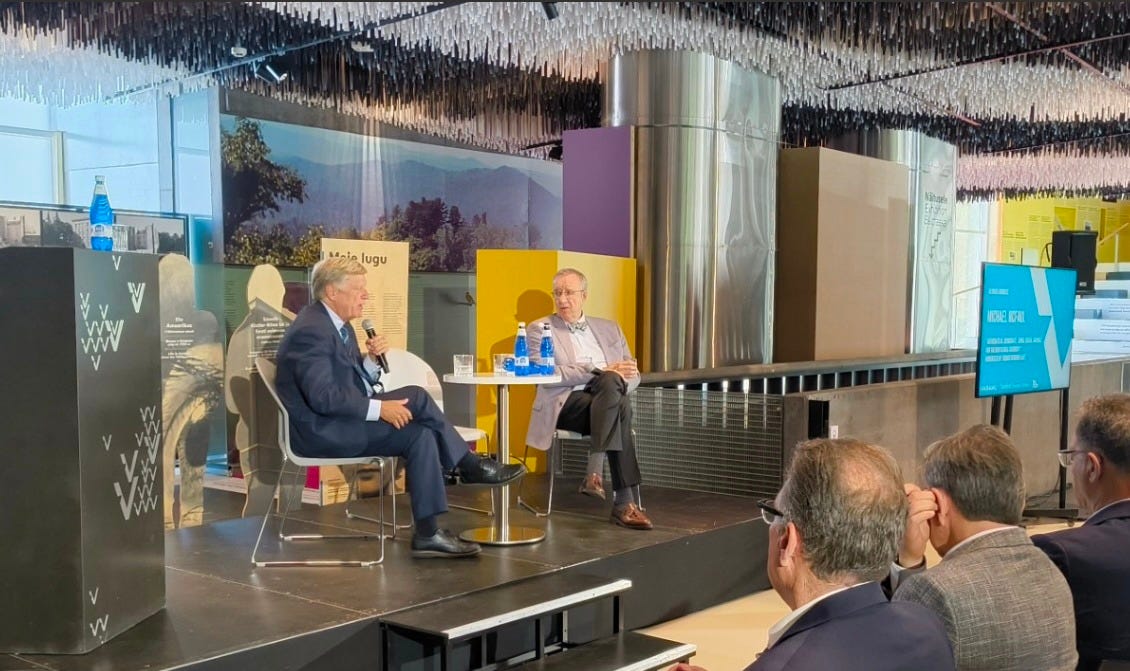
Given Trump’s actions, many Europeans I spoke to during my trip voiced their disappointment with America. They are fed up with the insulting ways we treat them. When I tried to push back and argue that Trump is an aberration and that we can get back to deeper transatlantic cooperation with the next president, I got a lot of pushback. What if Vice President J.D. Vance wins the next election? He has an even dimmer view of Europe than Trump, some worried. Others quipped that progressives in the Democratic Party don’t believe in NATO, either. More generally, during my time in Estonia, Finland and Sweden—three NATO allies, two of which share borders and all of which have troubled histories with Russia—I heard deep concern about whether Trump would adhere to Article 5 of the NATO treaty if one of them were attacked. Article 5 says that “an armed attack against one or more of them in Europe or North America shall be considered an attack against them all.” Few of those I spoke to in Estonia believed that Trump would go to war with his buddy Vladimir Putin to defend Narva, an Estonian city on the border with Russia whose population is mostly Russian.
This week’s NATO summit in Ankara, Türkiye, offered a test of these concerns I heard last week. The festivities in Ankara most certainly got off to a rough start. Trump once again revived his horrible idea of annexing Greenland. (See my Substack essay, Invading Greenland – Trump’s Worst Idea Ever.) He then pledged to cut off all trade to Spain because it refused to support his bombing of Iran. Before landing in Ankara, Trump published an insulting quip and a fake photo of Italian Prime Minister Giorgia Meloni on social media.
However, the summit ended without a major blow-up. Trump did not threaten to leave the alliance as he had done in previous summits. During his press conference, he even emphasized the tremendous unity he felt in the room when the cameras were off.
So, NATO lives on. I know that’s a low bar—but these days, just maintaining the status quo counts as a victory. American membership in NATO advances US security and prosperity, and avoiding a crisis within the alliance is a major achievement in the Trump era. If the United States is to compete successfully with China and Russia in this new era of great power competition, the subject of my last book, it needs NATO. (For the fuller argument, see my Substack essay, “The United States Needs NATO.)
There was also some good news regarding NATO and American support for Ukraine. The Ankara Summit Declaration stated that: “Allies pledge €70 billion in military equipment, assistance and training for Ukraine and affirm their sovereign commitments to sustaining at least equivalent levels in 2027.” That’s a significant commitment, one that should signal to Putin that time is not on his side.
During his meeting with President Zelenskyy, Trump also announced that he was ready to allow Ukraine to obtain a licensing agreement to produce interceptors for its Patriot missile defense system, which are currently in very short supply. From the way Trump floated the idea, it sounds like he had not yet consulted with Lockheed Martin or RTX, the current American producers of these interceptors, the PAC-3 and PAC-2. (Subsequently, we have learned that Trump may have meant that joint production could proceed with German or Japanese companies, but the details remain murky). And, of course, even if this does move forward, the time between such an announcement and actual production will be measured in many months, if not years. To save civilian lives, Ukraine needs more of these interceptors now. Nevertheless, the announcement was a positive sign that Trump has not fully abandoned Ukraine. In fact, in Ankara it seemed Trump was leaning back towards Zelenskyy—and that’s probably because the momentum on the battlefield has shifted to Ukraine, not Russia (See my recent Substack essay, Ukraine Is Winning). Of course, he could change his mind tomorrow, after one phone call to Putin. That has happened before. But all wins should be celebrated. Ankara was a win for Ukraine, and therefore, a win for European and American security, and a victory for freedom and democracy more generally.
One feel-good summit does not erase all the previous tensions in the NATO alliance. Europeans and Canadians still distrust Trump—an erratic leader who will, without question, lash out against our European allies again. But these days, no-drama summits with Trump must be counted as a positive outcome. That’s how I’m scoring the Ankara meeting.
Michael, "NATO lives on" is doing a lot of work here. An alliance whose success metric has dropped to "the American president did not detonate it this week" is not living. It is on a ventilator.
The behavioral read is simpler than the diplomatic one. Deterrence is not a treaty text. It is a belief state in an adversary's head about what a specific man will do at 3am. Article 5 was never the guarantee. The credibility of the signatory was. Once Tallinn stops believing, the clause is furniture. Nobody in Narva is reading the Washington Treaty. They are reading Trump's phone logs.
The €70 billion is real and it matters. But notice what it actually signals: Europe pricing in American absence and paying the premium itself. That is not alliance cohesion. That is a hedge. Hedges are rational. They are also how alliances end, quietly, one budget line at a time, long before anyone withdraws from anything.
You call a no-drama summit a win. I would call it evidence that the bar has been recalibrated so far down that the recalibration is itself the story. Institutions do not usually die by exit. They die when everyone starts behaving as if the institution were already gone, and then one day it is.
Ankara was not a victory. It was a stay of execution. Worth having. Worth naming correctly.
🐌Johan
I'd like to thank Mr. McFaul for allowing comments & not locking everything. Am I the only one who thinks the EU & NATO might actually benefit by being more independent from U.S.